
How to Draw a Cute Penguin
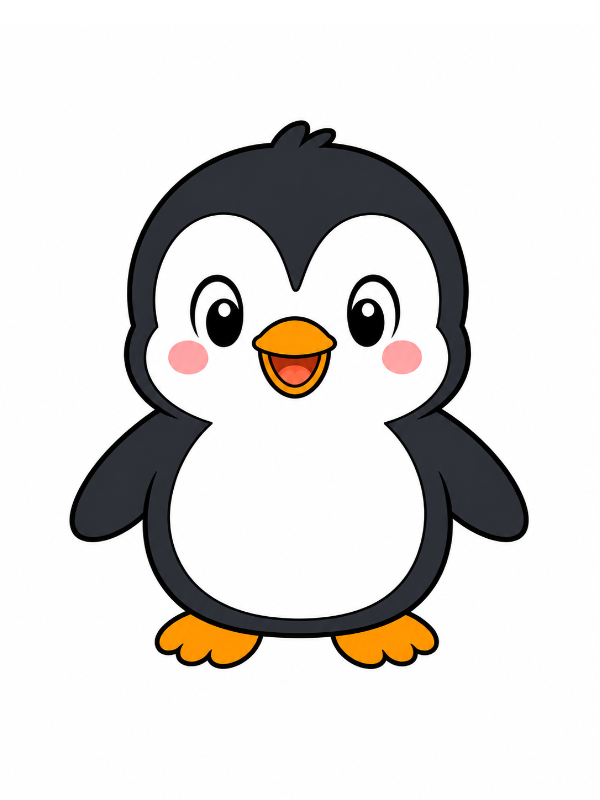
Learn how to draw an adorable baby penguin with easy, step-by-step drawing instructions. By following along with each stage, you too can create a perfect cute penguin — even if you've never drawn one before! All you need is a pencil, some paper, and a little patience. Let's get started.
This guide is designed for absolute beginners. We break down the penguin into basic, friendly shapes that build upon each other step by step. Take your time, sketch lightly, and most importantly, have fun!
Drawing Tutorial
Follow these step-by-step drawing instructions to draw a cute penguin.
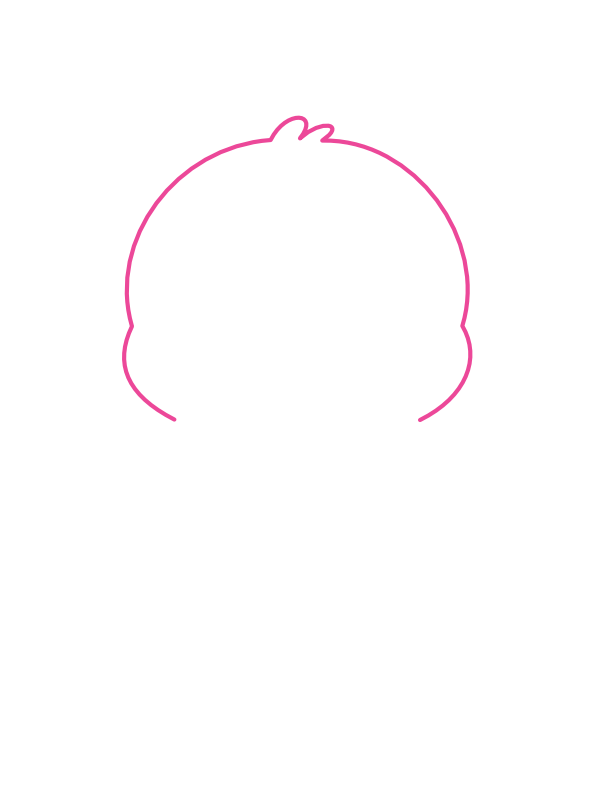
Draw the Head Outline
Begin your cute penguin by drawing a large, open rounded shape for the head. Use a single smooth curved line that sweeps up from the bottom left, arcs over the top, and comes back down to the bottom right — leaving the bottom open. At the very top of the head, add a small double bump to suggest a tiny tuft of feathers. On each lower side of the head, draw a small outward notch where the wings will later attach. This big open circle is the foundation of your entire drawing, so take your time getting a nice round shape!
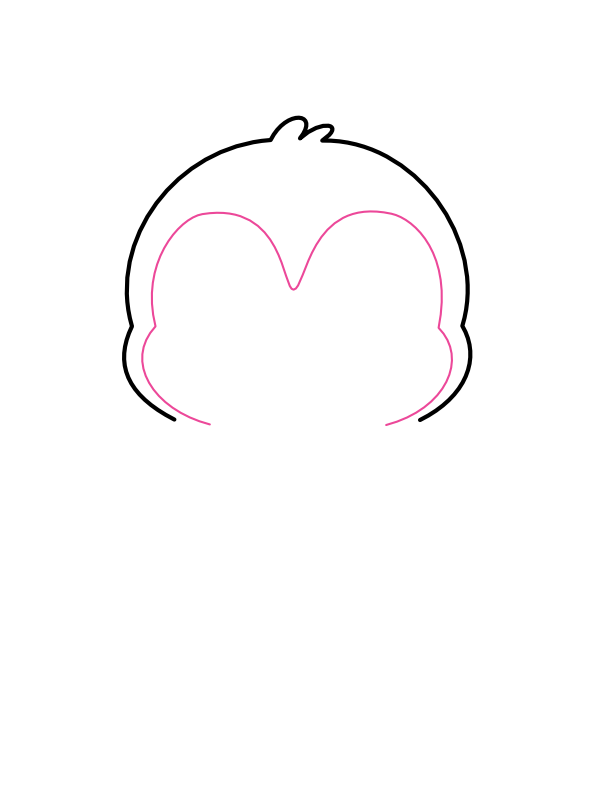
Add the Face Patch and Wing Hints
Now outline the head in solid black and begin adding the penguin's face patch. Inside the upper half of the head, draw a curved shape that sweeps across from side to side, dipping into a gentle V-point at the centre — like a soft upside-down heart. This lighter area will be the penguin's white face. On each lower side of the head (at the notches from Step 1), add two short curved lines angling outward and downward. These are the very beginnings of the wings, just peeking out below the head.
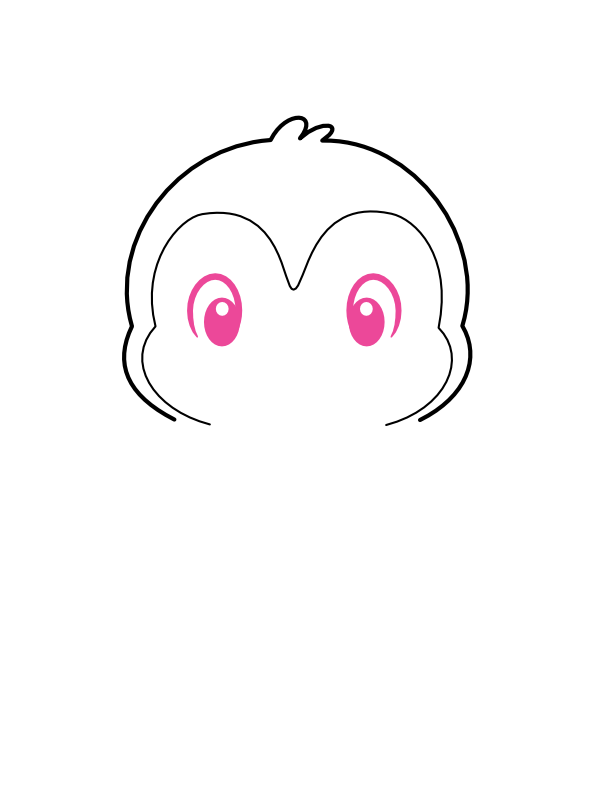
Draw the Big Sparkly Eyes
Give your penguin its most important feature — those big, gorgeous eyes! Place one eye on each side of the face patch, sitting just below the V-point at the top. Each eye is a large rounded oval shape. Inside each eye, draw a smaller oval for the iris, then add a bright teardrop-shaped highlight to give that sparkly, lively look. The eyes are large relative to the face — this is the key to making any cartoon animal look impossibly cute. Make them roomy and expressive!
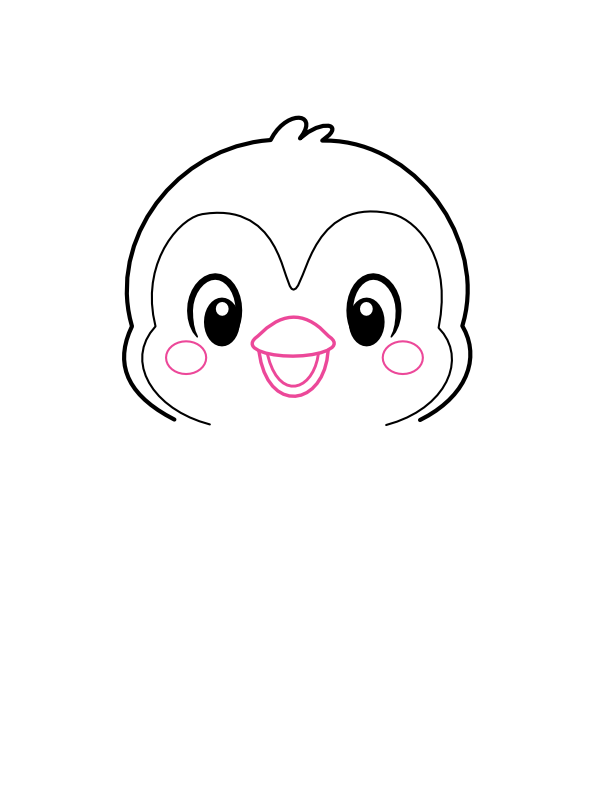
Add the Beak, Cheeks, and Finish the Face
Now bring the face fully to life. First, fill in the pupils in solid black, leaving the highlight white. Then, right between and slightly below the eyes, draw the penguin's small stubby beak — a short rounded triangular shape, open at the bottom with a small curved line suggesting a smiling open mouth. On each side of the beak, draw a soft oval for the rosy cheeks. These little blushing circles are what really give this penguin its warm, happy personality! Finally, clean up the face patch outline so it sits neatly between the eyes.
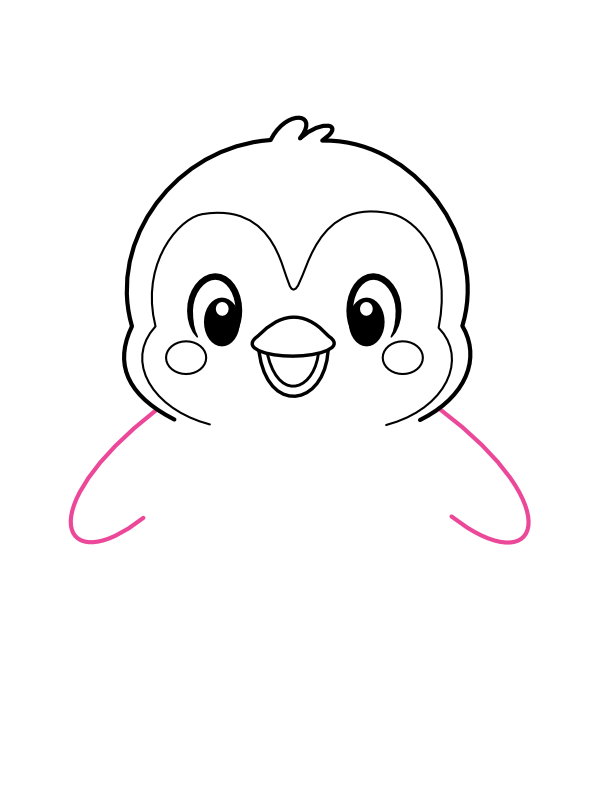
Sketch the Wings
It's time to give your penguin its little flippers! On each side of the body, draw one curved wing. Each wing starts just below and outside the head, sweeps outward, and curves gently back inward at the bottom — like a shallow rounded C shape on each side. Penguin wings are short, smooth, and paddle-shaped with no visible fingers, so keep the edges clean and rounded. At this stage the wings float below the head with space between — the body will connect everything together in the next step.
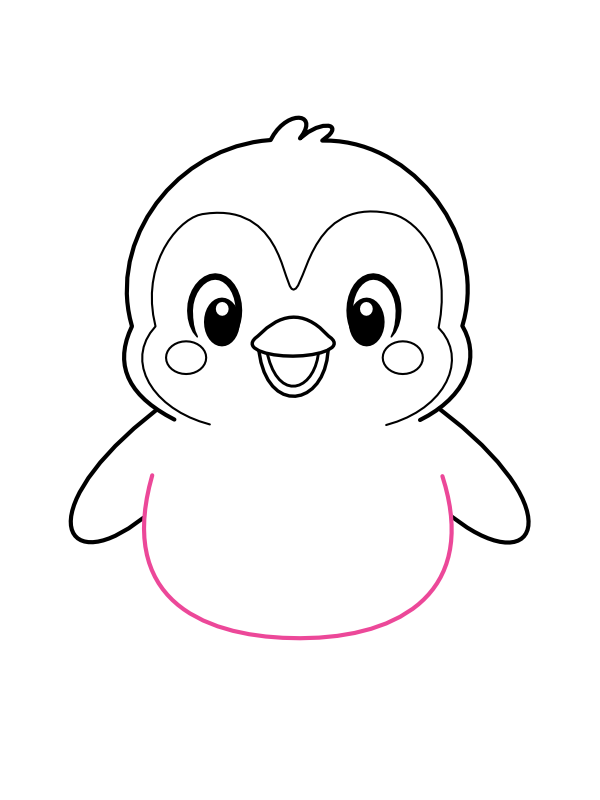
Draw the Chubby Round Body
Connect the two wings with a large, wide curved arc at the bottom to complete the penguin's plump belly. The body should be big and round — roughly as wide as the head. Draw the curve so it sweeps generously downward between the two wings, giving your penguin that satisfyingly chubby silhouette. At this stage, the belly curve is the only new line — it simply joins the bottom of the left wing to the bottom of the right wing in one smooth arc. Penguins are naturally round and stocky, so the rounder the better!
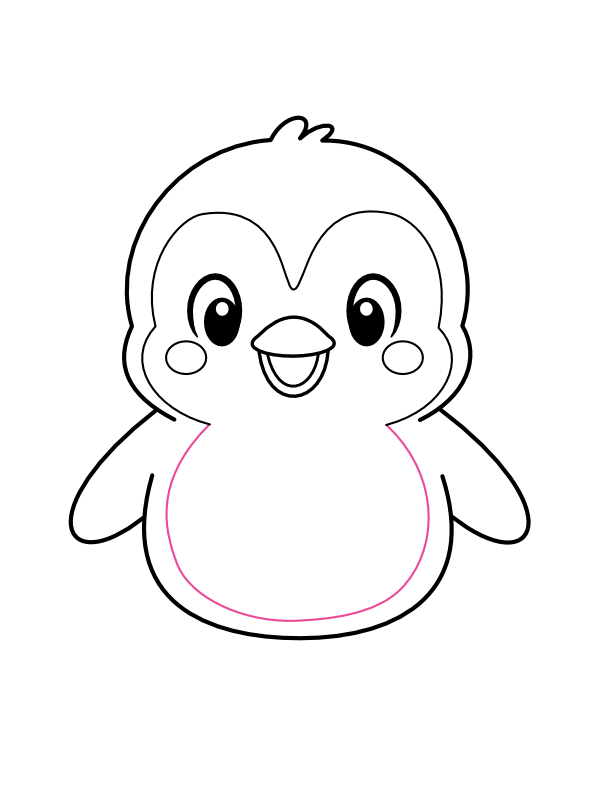
Add the Belly Patch
Now draw the lighter-coloured oval belly patch inside the body. Starting from just below the chin/beak area, draw a rounded oval that runs down through the centre of the body and stops near the bottom. The belly patch is wide at the top and slightly narrower as it reaches the lower body, following the natural curve of the torso. This white tummy area is one of the most recognisable features of a real penguin — it makes the black-and-white contrast really pop when you colour it in later!
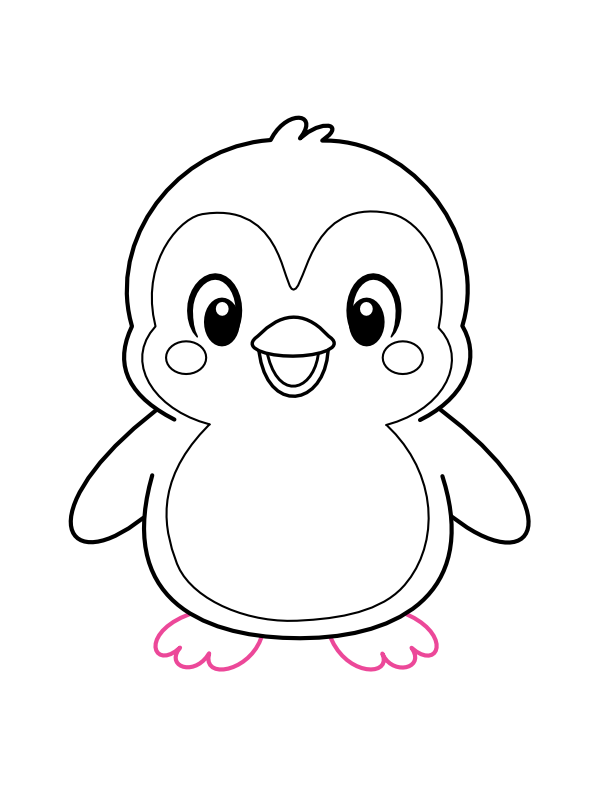
Complete the Full Body Outline
Now fully connect and clean up the complete penguin outline. Smooth out where the wings meet the sides of the body, making sure both sides look balanced and symmetrical. At the very bottom of the body, draw two small webbed feet poking out — each foot has three rounded toes fanning out slightly, like a small fan shape. Webbed feet are one of the most charming penguin details! Add a second inner oval line that follows just inside the belly patch, giving the tummy area a subtle layered look. Erase any rough guide lines from earlier. Your penguin's complete outline is now finished!
Colour Your Cute Penguin
Your penguin outline is now complete — and it's time for the most fun step of all! Colour the head, back, and wings in dark charcoal gray. Fill the belly patch and face area with clean white or very light cream. Colour the beak and feet in bright golden orange. Add soft pink to the round cheek circles. Fill the pupils solid black, leaving the small highlight dots white for that sparkly look. Step back and admire your finished cute penguin! 🐧
Final Thoughts
Well done — you've drawn your very own cute penguin! Drawing cartoon animals like this penguin is a wonderful way to practise the core building blocks of illustration: working with simple rounded shapes, building up detail layer by layer, and using contrast and colour to make your drawing come alive.
The more you practise, the easier and more natural it becomes. Experiment with giving it a different expression — maybe a surprised face or a cheeky wink. You could also try drawing other adorable animals, like a cute baby duck or a cartoon polar bear. Every new creature is a new adventure!
Learn More About Penguins
Expand your penguin knowledge with these fascinating real-world facts!
Fun Penguin Facts
The word "penguin" may come from the Welsh words pen (head) and gwyn (white), though its exact origins are debated.
Penguins have solid bones, unlike most birds, which makes them better suited to diving.
A group of penguins on land is called a colony; in the water, it is called a raft.
Penguins often return to the same mate and the same nesting site year after year.
The oldest known wild penguin lived to at least 16 years of age.
ArDraw Team
Helping beginners discover their inner artist with simple tools.